
Kids Sunscreen
Best Sunscreen for Kids in India: 100% Mineral SPF 50 (2026)
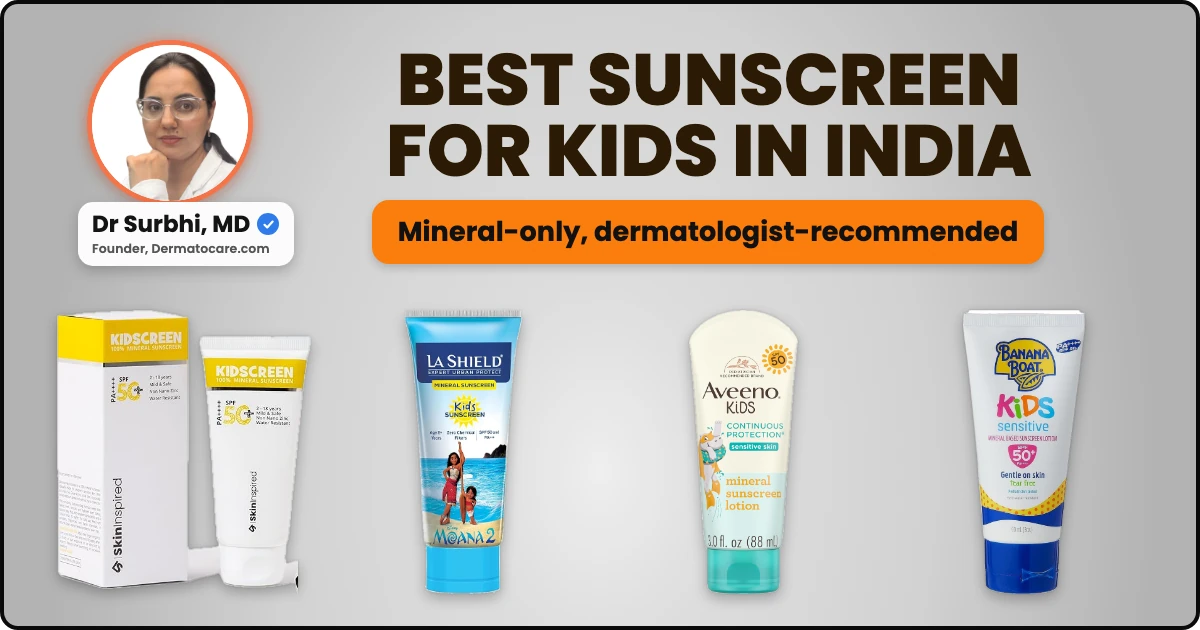
For children, we recommend 100% mineral sunscreens (zinc oxide or titanium dioxide), and avoid sunscreen entirely for infants under 6 months old. Out of 26 sunscreens reviewed on Dermatocare, Aveeno Kids Continuous Protection, La Shield All Skin Disney Moana Kids SPF, Banana Boat Simply Protect Kids Sunscreen Lotion SPF 50 and SkinInspired Kidscreen SPF 50+ PA++++ stand out as top choices because they are SPF 50, 100% mineral and completely fragrance-free.
How to Choose a Kids' Sunscreen
As a dermatologist, I recommend parents choose a kids' sunscreen with these three qualities:
100% mineral filters( zinc oxide or titanium dioxide): They sit on the skin as a physical shield, reflecting UV rays, rather than being absorbed into your child's body. I avoid older chemical filters (avobenzone, oxybenzone, octinoxate, octocrylene) for children, since they can absorb into the bloodstream and some are linked to hormone disruption or allergy.
Fragrance-free. Fragrance is a common trigger for irritation, especially on eczema-prone skin.
SPF 30 to 50 is enough. While SPF 30 blocks approximately 97% of UVB rays and SPF 50 blocks about 98%, sunscreens are rarely applied thickly enough in practice to achieve the full labeled protection. Because kids are typically exposed to intense sunlight during outdoor activities, SPF 50 is generally more reliable option. If using an SPF 30, ensuring a generous and thick application is essential.
RELATED ARTICLES
Watch instead
BEST & SAFE SUNSCREEN FOR KIDS
Dr Surbhi walks through the same picks on camera — useful if you'd rather be told than read.
▶ Watch on YouTubeSkinInspired
SkinInspired Kidscreen Sunscreen SPF 50
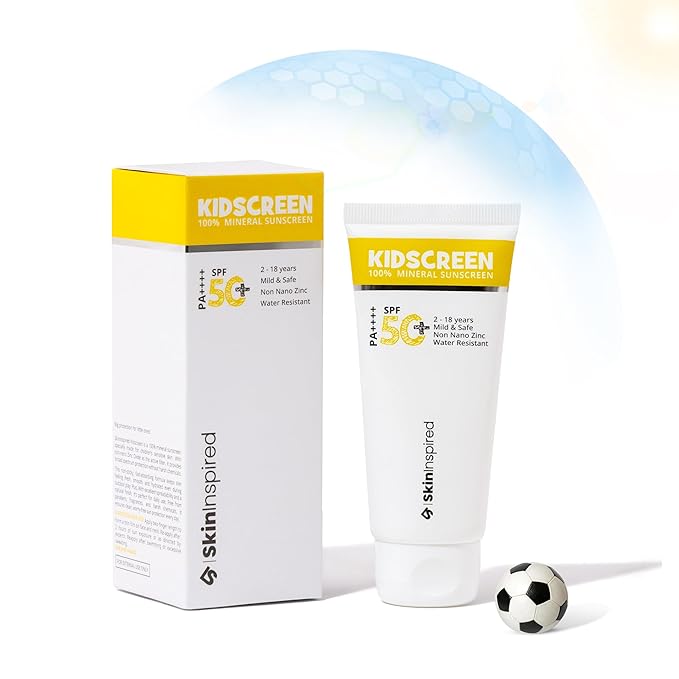

SkinInspired
SkinInspired Kidscreen Sunscreen SPF 50
SkinInspired Kidscreen Sunscreen SPF 50 formulated with 0 new-gen + 0 old-gen + 1 mineral filters. Aligned to the following age group based on our internal compatibility criteria: Toddlers 6 months–3 years, Children 3–12 years. Dermatologist guidelines advise against using sunscreen on infants below 6 months.
Best option for swimming and heavy sweating activities
Heavily silicone-based
Fragrance free
La Shield
La Shield All Skin Disney Moana Kids Sunscreen SPF 50
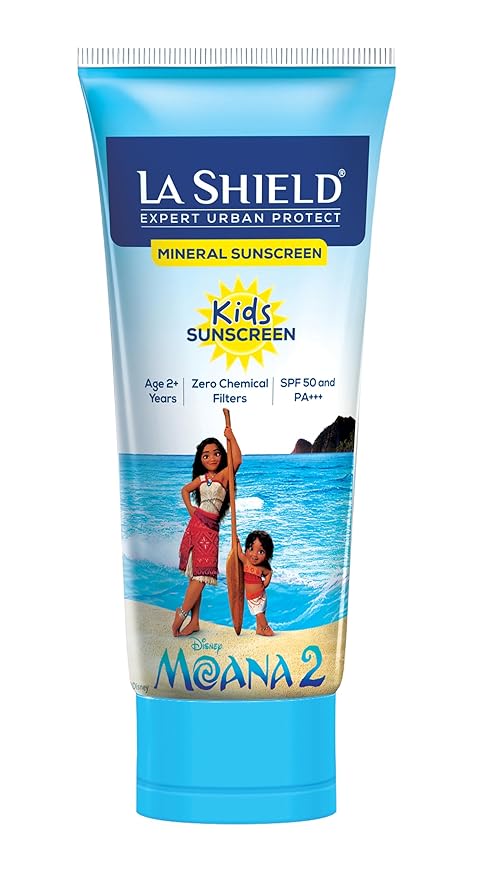
La Shield
La Shield All Skin Disney Moana Kids Sunscreen SPF 50
La Shield All Skin Disney Moana Kids Sunscreen SPF 50 formulated with 0 new-gen + 0 old-gen + 2 mineral filters. Aligned to the following age group based on our internal compatibility criteria: Toddlers 6 months–3 years, Children 3–12 years. Dermatologist guidelines advise against using sunscreen on infants below 6 months.
Best affordable option for regular use
has PA+++ instead of 4 (++++), which ensures high protection against damaging UVA rays.
Aveeno
Aveeno Kids Continuous Protection Sunscreen SPF 50
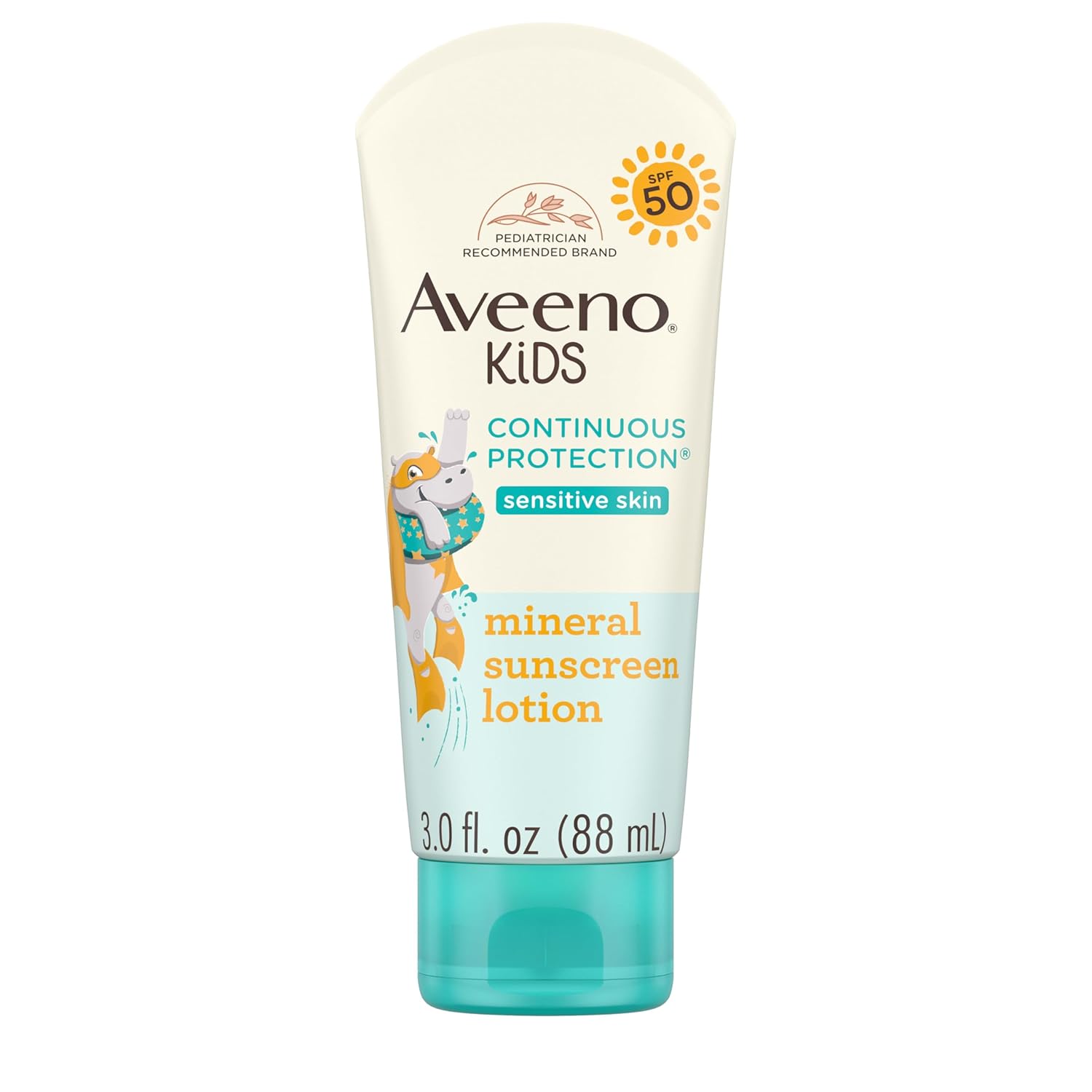
Aveeno
Aveeno Kids Continuous Protection Sunscreen SPF 50
Aveeno Kids Continuous Protection Sunscreen SPF 50 formulated with 0 new-gen + 0 old-gen + 1 mineral filters. Aligned to the following age group based on our internal compatibility criteria: Toddlers 6 months–3 years, Children 3–12 years. Dermatologist guidelines advise against using sunscreen on infants below 6 months.
Best Globally trusted option
Note: The brand does not mention the PA rating. It has 21.6% Zinc oxide, which is indirect proof of its efficacy.
Banana Boat
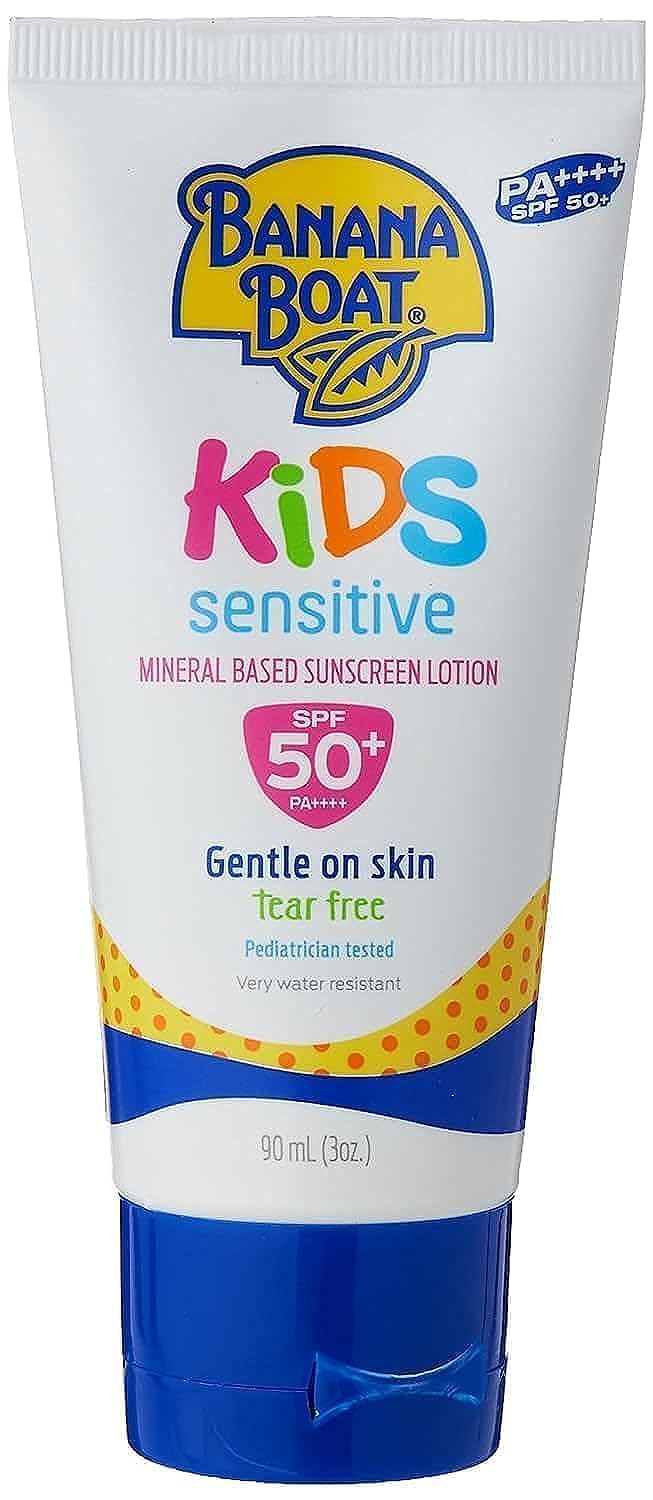
Banana Boat Simply Protect Kids Sunscreen Lotion SPF 50 (100% Mineral)
Banana Boat
Banana Boat Simply Protect Kids Sunscreen Lotion SPF 50 (100% Mineral)
Banana Boat Simply Protect Kids Sunscreen Lotion SPF 50 (100% Mineral) formulated with 0 new-gen + 0 old-gen + 2 mineral filters. Aligned to the following age group based on our internal compatibility criteria: Toddlers 6 months–3 years, Children 3–12 years. Dermatologist guidelines advise against using sunscreen on infants below 6 months.
Best global water resistant option
All the kids' sunscreens we have reviewed, and the filters in each
Product | Number of filters | Names of the filters |
0 new-gen + 0 old-gen + 2 mineral | Mineral: Zinc Oxide, Titanium Dioxide | |
0 new-gen + 0 old-gen + 1 mineral | Mineral: Zinc Oxide | |
Sol Pudding Kids & Teens Sports Sunscreen SPF 80 PA++++ ("Catch Me If You Can") | 0 new-gen + 0 old-gen + 1 mineral | Mineral: Zinc Oxide (but has fragrance) |
0 new-gen + 0 old-gen + 1 mineral | Mineral: Zinc Oxide | |
0 new-gen + 0 old-gen + 1 mineral | Mineral: Zinc Oxide | |
0 new-gen + 0 old-gen + 2 mineral | Mineral: Titanium Dioxide, Zinc Oxide | |
Aveeno Baby Continuous Protection Sensitive Skin Sunscreen SPF 50 | 0 new-gen + 0 old-gen + 1 mineral | Mineral: Zinc Oxide |
Banana Boat Simply Protect Kids Sunscreen Lotion SPF 50 (100% Mineral) | 0 new-gen + 0 old-gen + 2 mineral | Mineral: Titanium Dioxide, Zinc Oxide |
Neutrogena Pure & Free Baby Sunscreen Lotion SPF 50 (not available in India yet) | 0 new-gen + 0 old-gen + 1 mineral | Mineral: Zinc Oxide |
0 new-gen + 0 old-gen + 1 mineral | Mineral: Zinc Oxide | |
0 new-gen + 0 old-gen + 1 mineral | Mineral: Zinc Oxide | |
Sol Pudding All Day Sunscreen SPF 50 PA+++ ("Catch Me Outside") | 4 new-gen + 0 old-gen + 1 mineral | New-gen: Tinosorb M, Tinosorb S, Uvinul A Plus, Uvinul T 150; Mineral: Titanium Dioxide |
3 new-gen + 0 old-gen + 2 mineral | New-gen: Tinosorb S, Uvinul A Plus, Uvinul T 150; Mineral: Titanium Dioxide, Zinc Oxide | |
0 new-gen + 0 old-gen + 1 mineral | Mineral: Zinc Oxide | |
4 new-gen + 0 old-gen + 0 mineral | New-gen: Iscotrizinol, Tinosorb S, Uvinul A Plus, Uvinul T 150 | |
3 new-gen + 2 old-gen + 1 mineral | New-gen: Iscotrizinol, Tinosorb S, Uvinul A Plus; Old: Avobenzone, Octocrylene; Mineral: Titanium Dioxide | |
4 new-gen + 1 old-gen + 0 mineral | New-gen: Tinosorb M, Tinosorb S, Uvinul A Plus, Uvinul T 150; Old: Octinoxate | |
2 new-gen + 1 old-gen + 1 mineral | New-gen: Uvinul A Plus, Tinosorb S; Old: Avobenzone; Mineral: Titanium Dioxide | |
0 new-gen + 3 old-gen + 2 mineral | Old: Avobenzone, Octinoxate, Oxybenzone; Mineral: Titanium Dioxide, Zinc Oxide | |
Mother Sparsh Simply Unscented Baby Sunscreen Lotion SPF 50 PA+++ | 2 new-gen + 5 old-gen + 0 mineral | New-gen: Tinosorb S, Uvinul A Plus; Old: Avobenzone, Ensulizole, Homosalate, Octisalate, Octocrylene |
0 new-gen + 3 old-gen + 0 mineral | Old: Avobenzone, Octinoxate, Oxybenzone | |
0 new-gen + 3 old-gen + 0 mineral | Old: Avobenzone, Octocrylene, Oxybenzone | |
0 new-gen + 5 old-gen + 2 mineral | Old: Octinoxate, Octocrylene, Oxybenzone, Octisalate, Avobenzone; Mineral: Titanium Dioxide, Zinc Oxide | |
Ingredient list not found, so not counted | Not available | |
Ingredient list not found, so not counted | Not available |
Mineral vs chemical sunscreen for kids: which is better?
Mineral (also called physical) sunscreens use zinc oxide or titanium dioxide, which sit on the surface of the skin and reflect UV rays. Chemical sunscreens use filters that absorb UV, and some of these can be absorbed into the skin. For children we recommend mineral formulas, and every pick on this page is mineral.
Dermatocare child criteria flags older chemical filters avobenzone, oxybenzone, octinoxate and octocrylene, which are subject to ongoing regulatory discussion regarding absorption and potential hormone disruption. Newer chemical filters are permitted in several regions, but we prioritise mineral filters for children because there is less long-term data on them in this age group.
The trade-off is feel. Mineral sunscreens can leave a white cast and feel thicker, and the silicone-based ones are water-resistant but can feel heavy for daily indoor wear.
People also ask
Wait until 6 months. Before that, an infant's skin barrier is too thin to apply topicals safely — use shade, a hat, and light cotton clothing instead. After 6 months, a 100% mineral sunscreen is a reasonable choice.
RELATED ARTICLES
Medical & Editorial Disclaimer. This guide is educational content, not individualized medical advice, diagnosis or treatment for any child. It reflects a precautionary framework applied to publicly available ingredient-safety and regulatory literature, together with Dermatocare's own ingredient-database screening. This content does not replace individualized consultation with a pediatrician or dermatologist. Always verify the current ingredient list against the product label, since formulations change without notice.
Not sure which one is right for you?
Answer a few questions and get a full AM and PM routine built for your skin — free, and put together by a dermatologist.