Grey Hair & Hair color
Best Hair Colour in India (2026): Gentler Ways to Cover Grey
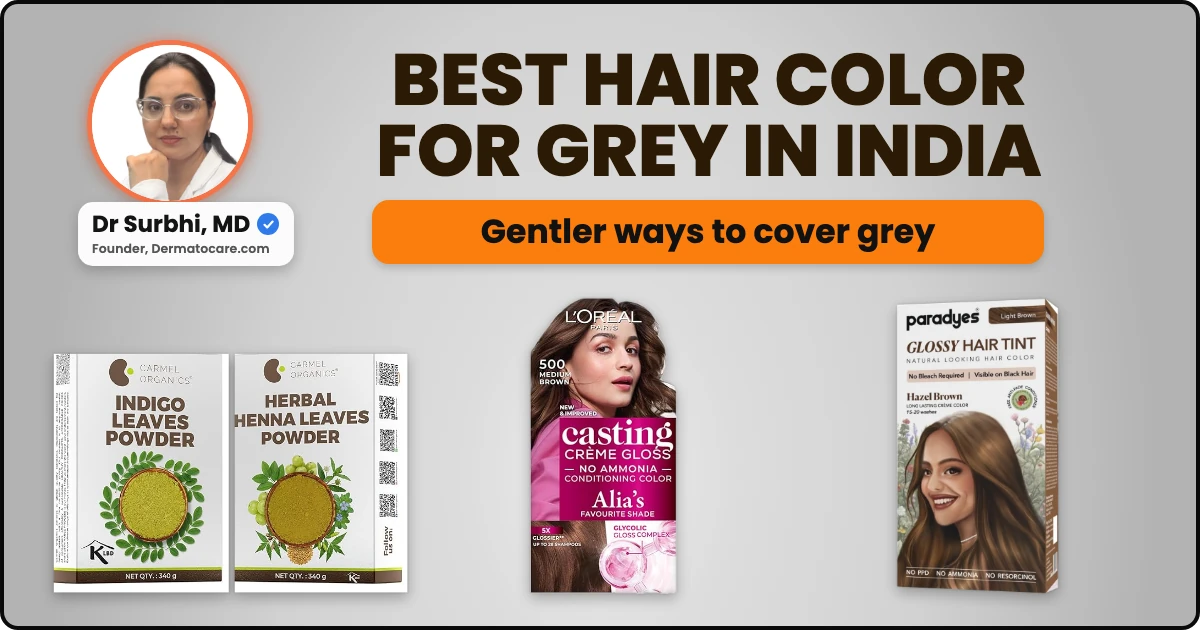
No hair colour is risk-free, because they contain harsh ingredients such as sodium perborate, PPD, PTD and resorcinol. The gentlest way to cover grey is pure henna followed by pure indigo, never a premix. If that does not cover your grey, our second pick is L'Oréal Paris Casting Crème Gloss, and Paradyes Glossy Hair Tint is an occasional backup if you are allergic to PPD. Avoid colour shampoos, and avoid any "herbal" colour that turns your hair black, since it usually hides PPD or PTD. Patch test every time, and colour as late and as rarely as you can.
Spotted your first few grey hairs and wondering which colour to buy? You will not be short of choices. The shelf is full of boxes that say herbal, natural, ammonia-free or ready in 5 minutes.
Here is what those labels do not tell you. Several products sold as herbal colour, including some we reviewed, contain PPD or PTD, the same strong dye chemicals as regular hair dye. And colour shampoos are far harsher than box dyes.
This guide shows how hair colour works, where the real risks sit, and which options in India are gentler on your scalp.
How does hair colour work?
To see why some colours are harsher than others, start with the hair itself. Each hair has an outer layer, the cuticle, and an inner core, the cortex. The cortex holds your natural pigment, melanin, and grey hair has lost its melanin. For colour to last, it has to get inside the hair, and how it gets in decides how harsh it is.
Permanent colour opens the cuticle with an alkali, such as ammonia or ethanolamine. Peroxide then bleaches your natural pigment and links small dye molecules, such as PPD, into larger ones that get trapped inside. The colour does not wash out. It only grows out.
Demi-permanent colour uses a weaker alkali and a weaker peroxide. It colours the outer part of the core and fades over about 20 to 30 washes.
Henna and indigo are plant dyes that stain the outside of the hair. They don't need peroxide or PPD.
Colour shampoos are not a gentler type. With a box dye, the dye and the peroxide are mixed in a bowl before they go on your scalp. A colour shampoo does the same steps on your scalp itself, which makes it far harsher.
To know more watch the video given below:
Watch instead
Best Hair Colour in India (2026): Gentler Ways to Cover Grey
Dr Surbhi walks through the same picks on camera — useful if you'd rather be told than read.
▶ Watch on YouTubeNatural - Henna & Indigo
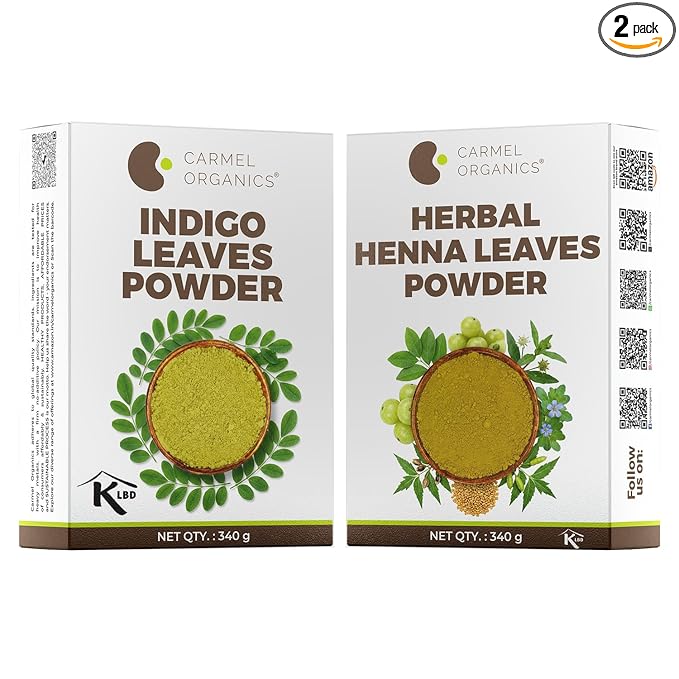
Natural - Henna & Indigo
Best no chemical option
What it is: A home-based option where you apply a henna paste first and an indigo paste over it to cover grey hair. Henna turns grey hair orange-red, and indigo turns it brown to black.
Best for: Anyone who has not started colouring and has a few greys showing up.
Note:
Buy pure henna and pure indigo powders, not a premix.
If your henna turns your hair black, it contains PPD and is like your regular hair dye.
Patch test for 48 hours. Do not use henna if you have G6PD deficiency.
It may not cover your grey if you have a lot of it.
L'Oreal Paris
L'Oréal Paris Casting Crème Gloss Hair Color With Glycolic Gloss Complex


L'Oreal Paris
L'Oréal Paris Casting Crème Gloss Hair Color With Glycolic Gloss Complex
L'Oréal Paris Casting Crème Gloss Hair Color With Glycolic Gloss Complex features Toluene-2,5-Diamine (PTD) as its primary coloring agent alongside Hydrogen Peroxide as a bleaching agent, Ethanolamine to open the hair cuticle, and Resorcinol as a chemical coupler.
Best chemical based option with repairing mask
What it is: A demi-permanent colour with low-strength peroxide. It fades gradually and comes with a glycolic acid mask.
Best for: Grey that henna and indigo do not cover. Mid-priced.
Note:
Though it is ammonia-free, it uses ethanolamine, which still lifts the cuticle like ammonia.
It contains PTD, resorcinol and p-aminophenol, which are also present in other box hair dyes.
Paradyes
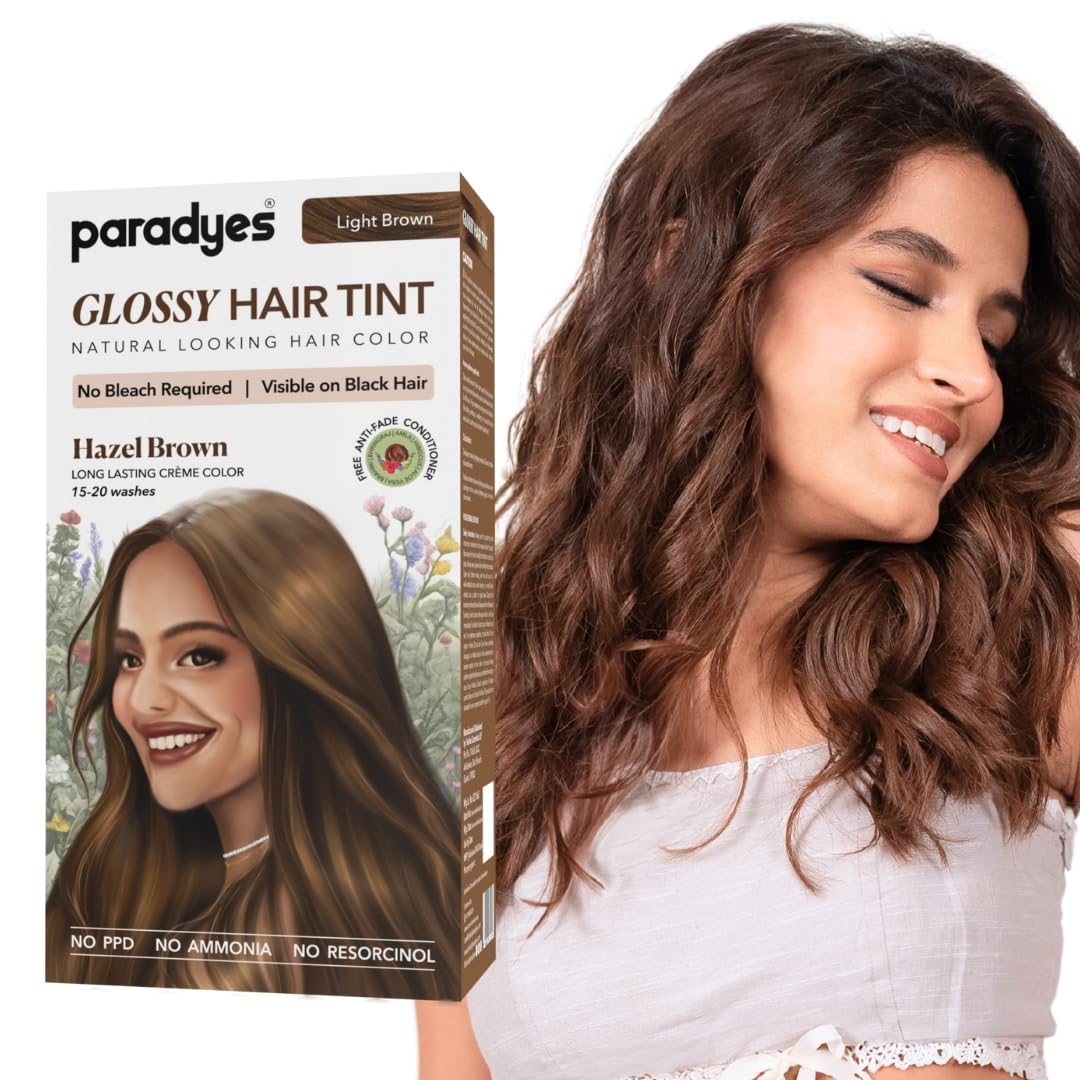
Paradyes Glossy Hair Tint
Paradyes
Paradyes Glossy Hair Tint
Paradyes Glossy Hair Tint features Basic Red 51, Brown-16, Brown-17, and CI 60730 as its primary coloring agents — direct azo dyes, not PPD or PTD — alongside Hydrogen Peroxide as a bleaching agent and Monoethanolamine to open the hair cuticle.
Best chemical based option for this who have hair dye allergy
What it is: A semi-permanent tint with azo dyes in place of PPD and PTD.
Best for: People who reacted to PPD hair dyes, as an occasional backup. Mid-priced.
Note:
It still has peroxide and ethanolamine, like your regular hair dye, and can damage your hair with repeated use.
Azo dyes are also regulated (the EU restricts several of them in hair dye) and should not be overused.
What are the risks of hair colour?
1. Allergy
PPD-based hair dye. PPD, PTD and resorcinol are strong skin sensitisers. A reaction can mean itching, a swollen scalp, oozing blisters or a swollen face, and it can start suddenly even if you have coloured for years. "PPD-free" does not mean allergy-free, because many PPD-free colours use PTD, a close relative of PPD.
Black henna. When it is used, black henna turns your hair black, whereas real henna stains orange to red. The reason is that most black hennas in India contain PPD or PTD, the same chemicals used in box hair dye. If you have had a black henna tattoo, your chance of an allergy to hair dye also goes up in the long term.
Pure henna. Allergy to pure henna is uncommon, but a 2026 review found 13 studies reporting confirmed reactions to it. One woman allergic to PPD reacted to pure henna, black tea and indigo. Henna can also harm people with G6PD deficiency, a blood enzyme condition, because it can break down red blood cells.
2. Hair damage
Permanent colour swells the cuticle. In one woman studied under an electron microscope, the damage was worst between 6 hours and 1 day, and the hair had almost recovered by 8 weeks.
3. Cancer
The evidence is mixed. One study in Los Angeles found that women who coloured monthly for 15 years or more had 3.3 times the risk of bladder cancer. A 2014 analysis that pooled 17 studies found no higher risk among people who colour their hair at home. Hairdressers, who handle dye every day, did have a higher risk in the Los Angeles study.
4. Pregnancy
The studies are small and show links, not proof. One linked hair dye use in the month before or during pregnancy with more neuroblastoma in children. Another linked use before pregnancy with low birth weight. Our guide advises avoiding hair colour in the first trimester and also to avoid allergy that might need medications during pregnancy.
Avoid these hair colors
1. Black henna, including herbal-labelled products. Products sold as herbal hair colour or henna, such as Patanjali Kesh Kanti Herbal Mehndi, are often black henna: henna combined with PPD or PTD. They are often harsher. The ones we reviewed still contain PPD or PTD.
2. Colour shampoos. They do on your scalp the steps that a box dye does in a bowl, where the dye and the peroxide are mixed before you apply them.
3. Colouring just for fashion. If you have no grey hair, do not start colouring.
4. Colouring in pregnancy. Ask your doctor first. Our guide advises avoiding hair colour in the first trimester.
5. Colouring as a teen. Avoid hair colour.
How to colour with less risk
You do not have to give up colour to cut the odds of trouble. Whichever colour you choose, these habits lower the chance of a reaction and of hair damage.
Patch test every time, at least 24 hours before and ideally 48, even with a colour you have used before.
Colour only your greys or roots, and leave at least 8 weeks between full colourings.
Choose a kit with a separate colour cream and a liquid developer, mixed just before you use it. Herbal hair colour powders, or liquids sold pre-made, often contain sodium perborate, which releases peroxide when mixed with water.
Skip 5-minute colour shampoos. They are still full permanent dyes.
Use the acidic mask or conditioner that comes with the kit after colouring. It closes the cuticle and helps hold the colour.
Wear gloves, and keep dye off your eyes and skin.
Do not colour if your scalp is irritated, cut or infected.
All hair colours we reviewed
Already have a box at home? Check it against the list below.
Hair colour | Key points |
Biotique Herbcolor Conditioning Hair Colour Affordable | • Colouring agent: PPD, up to the 1% limit, with resorcinol • Bleaching agent: Hydrogen peroxide • Watch: Herbal label, but it is a permanent cream kit. It is ammonia-free but uses ethanolamine, which still lifts the hair cuticle. It has fragrance and silicone. |
BSY Noni Black Hair Magic 3 in 1 Natural 5-Min Hair Colour Shampoo Affordable | • Colouring agent: PPD and resorcinol • Bleaching agent: Hydrogen peroxide • Watch: A colour shampoo, so the dye and peroxide act on your scalp, which is harsh. Despite the noni label, it is a full permanent dye. It uses ethanolamine and has Cocamide DEA. |
• Colouring agent: We could not find an ingredient list • Bleaching agent: Not known yet • Watch: Review pending. We will publish it when a full ingredient list is available. | |
Indus Valley Damage Free Natural Gel Hair Colour Mid-priced | • Colouring agent: PTD (a close relative of PPD) with eight other synthetic dyes and couplers • Bleaching agent: Sodium perborate in the powder, which makes peroxide when mixed with water • Watch: This is black henna, even though it is sold as herbal. It has synthetic dyes and is not peroxide free. |
• Colouring agent: We could not find an ingredient list • Bleaching agent: Not known yet • Watch: Review pending. We will publish it when a full ingredient list is available. | |
L'Oréal Paris Casting Crème Gloss Hair Color With Glycolic Gloss Complex Mid-priced | • Colouring agent: PTD, resorcinol and p-aminophenol • Bleaching agent: Hydrogen peroxide, low strength • Watch: On our best list. It uses ethanolamine. The kit has a glycolic acid gloss mask. It has fragrance and silicone. |
L'Oréal Paris Excellence Crème Triple Care Mid-priced | • Colouring agent: PPD with resorcinol • Bleaching agent: Hydrogen peroxide • Watch: It is ammonia-free but uses ethanolamine. The kit has a shampoo and a mask. It has fragrance and silicone. |
• Colouring agent: We could not find an ingredient list • Bleaching agent: Not known yet • Watch: Review pending. We will publish it when a full ingredient list is available. | |
Mid-priced | • Colouring agent: Azo dyes, with no PPD, PTD or resorcinol • Bleaching agent: Hydrogen peroxide developer • Watch: On our best list for people allergic to PPD. It also has ethanolamine, like regular hair dye. Azo dyes are also regulated (the EU restricts several of them in hair dye) and should not be overused. |
Patanjali Kesh Kanti Herbal Mehndi Affordable | • Colouring agent: PPD, p-aminophenol and resorcinol • Bleaching agent: Sodium perborate, which makes peroxide when mixed with water • Watch: This is black henna, even though it is sold as herbal. The henna leaf is listed at about 30%, alongside the synthetic dyes. |
Sacred Herbs Ammonia & PPD Free Natural Organic Gel Hair Color Mid-priced | • Colouring agent: PTD and p-aminophenol • Bleaching agent: Sodium monoperborate in the powder, which makes peroxide when mixed with water • Watch: This is black henna, even though it is sold as herbal. It is PPD-free and ammonia-free, but PTD is a close relative of PPD and it uses triethanolamine. It also has DMDM Hydantoin, which releases formaldehyde. |
Shesha Ayurveda Nilini Hair Colour Mid-priced | • Colouring agent: PPD, under 3% • Bleaching agent: None. It is the only one we reviewed with no peroxide and no ethanolamine. • Watch: This is black henna, even though it is sold as herbal and has henna and indigo, because it also has PPD. The fine print says the PPD cuts the time from about 3 hours to 60 minutes. |
• Colouring agent: PPD and resorcinol • Bleaching agent: Hydrogen peroxide • Watch: A colour shampoo, so the dye and peroxide act on your scalp, which is harsh. It uses ethanolamine and has Cocamide DEA. We could not find the brand's own ingredient list. | |
ThriveCo Henna Gel Hair Colour Mid-priced | • Colouring agent: PTD and m-aminophenol • Bleaching agent: Sodium perborate, which makes peroxide when mixed with the gel activator • Watch: This is black henna, even though it is sold as herbal and bleach-free. Our review used a third-party ingredient list. |
ThriveCo Permanent Hair Color Crème Affordable | • Colouring agent: PTD and resorcinol • Bleaching agent: Hydrogen peroxide, 20 volume (6%) • Watch: It is ammonia-free but uses ethanolamine. Our review used a third-party ingredient list. |
When to stop and get help
Colour should never burn, swell or blister. If your scalp or skin reacts, rinse the colour off straight away with plenty of water. See a dermatologist the same day if your face or eyelids swell, or if you get blisters or oozing. Go to emergency care if you have trouble breathing. Do not colour again until a dermatologist has patch tested you.
People also ask
On our reviews, these contain PPD: Biotique Herbcolor, BSY Noni Black Hair Magic, ThriveCo Hair Coloring Shampoo, Patanjali Kesh Kanti Herbal Mehndi, L'Oréal Paris Excellence Crème and Shesha Ayurveda Nilini Hair Colour (under 3%).
References
Ahn HJ, Lee WS. An ultrastuctural study of hair fiber damage and restoration following treatment with permanent hair dye. Int J Dermatol. 2002;41(2):88-92. PMID 11982643
Ben Yahia M, Korbi M, Belhadjali H, et al. Allergic Contact Dermatitis to Pure Henna: A Systematic Review. Contact Dermatitis. 2026. PMID 42535430
Gago-Dominguez M, Castelao JE, Yuan JM, et al. Use of permanent hair dyes and bladder-cancer risk. Int J Cancer. 2001;91(4):575-579. PMID 11251984
Jiang C, Hou Q, Huang Y, et al. The effect of pre-pregnancy hair dye exposure on infant birth weight: a nested case-control study. BMC Pregnancy Childbirth. 2018;18(1):144. PMID 29743046
Kandil HH, al-Ghanem MM, Sarwat MA, et al. Henna (Lawsonia inermis Linn.) inducing haemolysis among G6PD-deficient newborns. A new clinical observation. Ann Trop Paediatr. 1996;16(4):287-291. PMID 8985525
Kind F, Scherer K, Bircher AJ. Contact dermatitis to para-phenylenediamine in hair dye following sensitization to black henna tattoos: an ongoing problem. J Dtsch Dermatol Ges. 2012;10(8):572-578. PMID 22299643
McCall EE, Olshan AF, Daniels JL. Maternal hair dye use and risk of neuroblastoma in offspring. Cancer Causes Control. 2005;16(6):743-748. PMID 16049813
Sienkiewicz-Szłapka E, Janysz A, Wróbel MH. Quantification of Lawsone and p-Phenylenediamine in Natural Henna Products for Hair Colouring Available in Poland. Contact Dermatitis. 2025;92(4):261-272. PMID 39756814
Swan BC, Tam MM, Higgins CL, et al. Allergic contact dermatitis to substitute hair dyes in a patient allergic to para-phenylenediamine: Pure henna, black tea and indigo powder. Australas J Dermatol. 2016;57(3):219-221. PMID 26916211
Turati F, Pelucchi C, Galeone C, et al. Personal hair dye use and bladder cancer: a meta-analysis. Ann Epidemiol. 2014;24(2):151-159. PMID 24342029
Zinkham WH, Oski FA. Henna: a potential cause of oxidative hemolysis and neonatal hyperbilirubinemia. Pediatrics. 1996;97(5):707-709. PMID 8628611
Not sure which one is right for you?
Answer a few questions and get a full AM and PM routine built for your skin — free, and put together by a dermatologist.