
Red pimples
How to get rid of Pimples or Acne- Dermatologist Guide
Doctor, my pimples just won’t go away. What is the most effective acne treatment?
The optimal treatment for acne involves the use of oral antibiotics or Isotretinoin, along with topical applications of benzoyl peroxide and Differin gel. However, it’s worth noting that many patients experience a recurrence of pimples after discontinuing these treatments, and prolonged reliance on anti-acne medications alone is not practical.
If you desire clear, pimple-free skin with minimum medication use, stick to acne-free diet and skincare regimes designed to eliminate acne. This approach has been successfully implemented for hundreds of acne patients in our clinic, yielding positive results.
Before starting the acne regimen, it’s essential to identify the specific type of acne you have.
Identifying the Type of Acne:
Acne can manifest in three primary ways: comedones (blackheads and whiteheads), red or pus-filled pimples, and cystic lesions. Dermatologists recommend different anti-acne products based on the type of acne.
Comedones (Blackheads/Whiteheads):
Comedones arise from uncontrolled oil secretions, the use of thick occlusive creams, or excessive layering of products. In both cases, the oil gland openings become blocked by cellular debris, resulting in black and whiteheads.
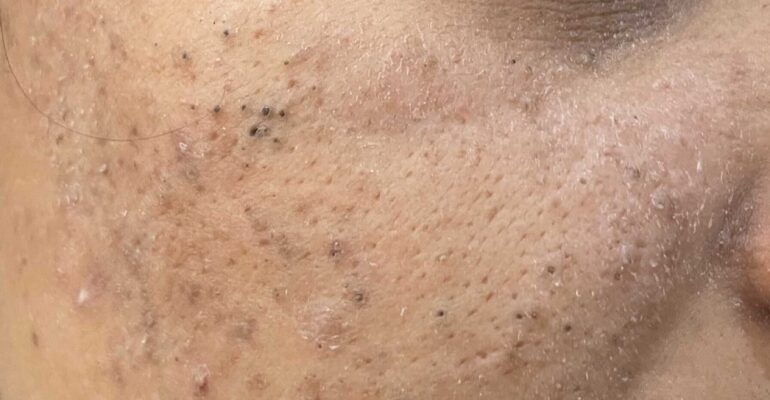
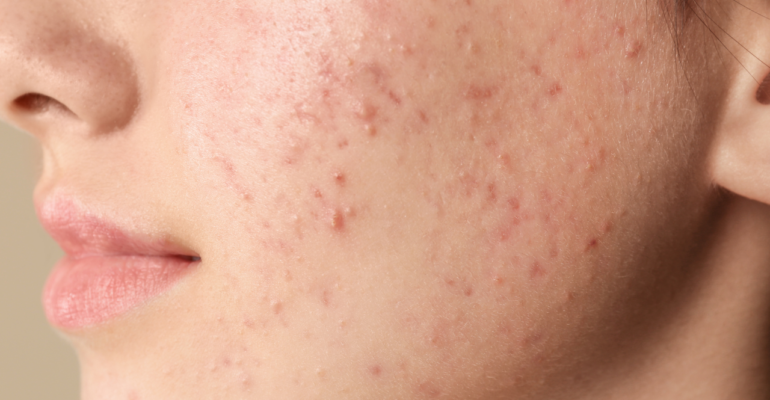
Red or Pus-Filled Pimples:
These pimples occur when the bacteria Propionibacterium acnes overgrows in clogged pores. Over-the-counter products with ingredients like neem, tea tree oil, liquorice, and niacinamide may provide some relief.
Cyst or Nodular Acne:
When the battle between your immune system and bacteria remains unchecked, small red pimples may evolve into large nodules or cysts. Immediate dermatological treatment is highly recommended to prevent scarring after healing.

Now let us breakdown acne skin care regime for you!
Morning regime
Step 1: Face wash
Washing face 2-3 times is absolutely essential in acne prone skin. Use face wash that remove excess oils without disturbing the skin barrier. If your skin feels dry, flaky or irritated, then you should switch to milder face wash.
Do not use a harsh face wash that makes your skin over-dry. I see a lot of patients who first use harsh face wash and then put a cream to moisturise. Well, that’s a disaster for acne-prone skin. Instead, use a face wash that removes excess oils from skin, so that skin feels soft and supple, rather than dry or stretched.
Step 2: Rose water
Pat dry your face after washing and spray rose water. Massage rose water until it gets absorbed. Rose water hydrates and soothe your skin without clogging your pores.
Step 3: Anti-acne Serum
In the morning you can choose from the following agents based on key skin concern:
Niacinamide for sensitive skin:
It is the first choice for red pimples with dark spots in sensitive skin types. Niacinamide at a concentration of 10% has skin lightening effect, anti-inflammatory, and anti-acne action.
Salicylic acid for comedones:
Salicylic acid is star ingredient for reducing black/white heads and open pores. It also reduces oil secretion. Go for salicylic acid 2% serum if your skin is very oily with open pores and comedones. Do not combine salicylic acid with Adapalene or retinoids, because both have similar action and combination is too drying.
Azelaic acid for post acne dark spots:
Azelaic acid is one of my favorite ingredients. It soothes sensitive skin, prevents acne, and reduces dark spots. It can be applied for 2-3 months without side effects. However, avoid Azelaic acid if your skin is dry, red, irritated, or burning.
Step 4: Sunscreen
Sunscreen tends to clog pores and trigger pimples. Therefore, it is pertinent to use a lightweight sunscreen in gel/lotion/fluid preparation that has water as the first ingredient. Avoid silicon-based sunscreen because it occludes pores by forming a thick layer on top.
Make sure you apply at least a coin-size amount on the full face 30 minutes before going out in the sun.
Step 5: Make-up
Make-up sits on the top of all the products. If you use makeup daily, then make sure you use a thin fluid based product. Even better is to use a compact powder that gives coverage of foundation and absorbs extra oil.
Noon Skin Care
Most of you would look greasy and dark by mid-day. In this case, wash your face again. If you can’t wash your face at the workplace, then wipe your face with micellar water. This removes excess oils and gives an instant matt look. Put on your sunscreen.
Night Skin Care
Night skin care begins by removing make-up (if needed) with micellar water, followed by face wash and rose water. At night, you can use the most effective anti-acne agents because they tend to react with the sun. The choice of agent depends on your key skin concern.
Comedones
White heads and blackheads can be take care by Retinoids or salicylic acid. We recommend every acne patient to use retinoids at night because they prevent clogging pores, reduce oil secretion and prevent acne.
Red pimples
Benzoyl peroxide, neem, tea tree oil etc are few OTC effective agents that can be tried for Red pimples at home.
Adapalene: Adapalene is the most commonly used medicine to reduce acne. It is available on prescription in India. However, it is OTC in the United States by the name of Differing gel.
Tretinoin: It is most potent retinoid. It is prescribed by dermatologist if Adapalene does not show results or if patient has lot of black/whiteheads.
Retinoid looks like a good choice. But, they work by drying your skin and exfoliating the dead skin cells. It is important to start them gradually especially if your skin is on dry side, or get irritated easily. Here are the steps:
First night: Apply adapalene/tretinoin gel only on pimples at night.
Second night: Put on the area where you are getting pimples.
Third night: If you don’t notice any dryness, redness, irritation, peeling or stiffness, then apply on full face except the under eye area, and area around the nose and mouth.
Every night before applying adapalene or tretinoin, looks for subtle signs of retinoid dermatitis like dryness, redness, irritation, peeling or stiffness. In this case, put a non-comedogenic moisturiser first on dry skin and then put adapalene or tretinoin on active pimples. Skip if these signs become worse.
Stop adapalene/tretinoin for a few days if you notice rash, itching, or bumps. Restart gradually once the skin feels better.
Post-acne dark spots
Glycolic acid is worth trying for stubborn post- acne dark spots. It reduces acne, dark spots, tanning and dull skin. It is available OTC in various countries in concentration ranging from 3 % to 10 %.
Start with 3% if your skin sensitive, dry or irritated. Move on to 10% if your skin tolerates lower concentration. Glycolic acid might not suit sensitive skin, In this case you can try azelaic acid or Kojic acid based product.
Multivitamins
We at our clinic prescribe multivitamins rich in Zinc and Vitamin D for 3 months in acne patients. A lot of studies support the role of Zinc in acne.
When to consult dermatologist?
Well, I don’t want to raise false hope for this who are not ready for this 3 month pimples challenge. You are ready to enter this challenge if:
Your have less than 5-10 red or pus pimples on face at this moment.
Blackheads/white heads do not cover more than 30% of face.
Black/whiteheads are not more than 0.5 cm in diameter. Macro-comedones can be removed by dermatologist by RF machine.
No cystic or nodular acne.