
Red pimples
6 Type of acne scars and their treatment: Dermatologist Guide
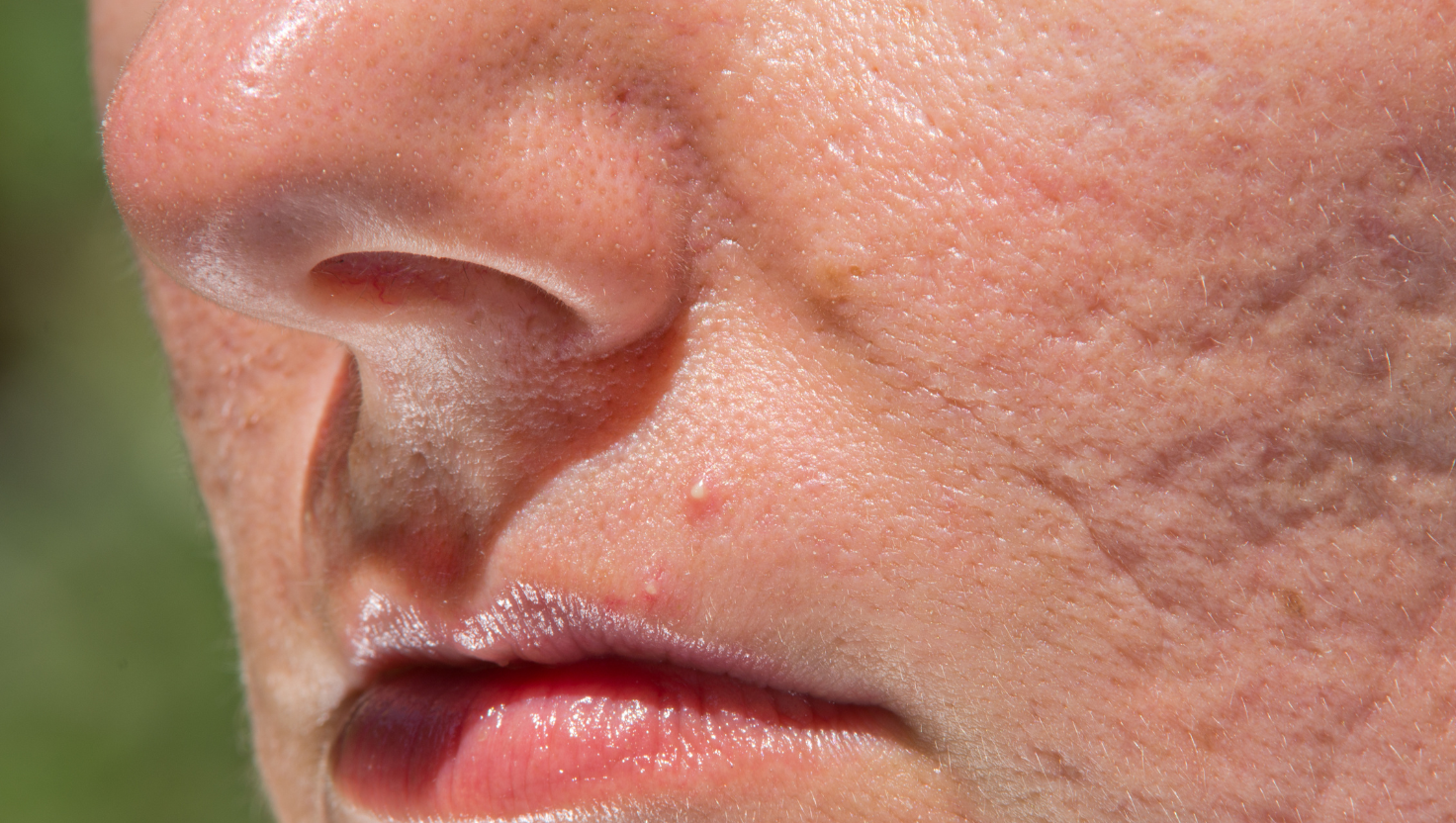
Acne scars fall into six types: brown, white, red, papular, depressed and keloid. Flat marks respond to creams, but depressed and raised scars usually need procedures. This dermatologist guide explains how to identify each type of acne scar and the treatments that genuinely improve them.
Acne scars can be categorized into six main types: brown, white, red, papular, depressed, and keloids. While medications can help with red, white, and brown scars, more advanced treatment is usually necessary for depressed or raised scars, including multiple procedures at a dermatologist’s clinic.
In this article, I provide an overview of effective treatment options for each type of acne scar. Be sure to read through to the end, where we have an insightful interview with celebrity dermatologist Dr. Rinky Kapoor, discussing the role of lasers in treating acne scars.
Do try our Solution finder tool to get dermatologist recommended regime customised for type of acne scars listed below.
Type of acne scars and treatment
Watch this video for brief overview of diffrent type of acne scars:
Brown spots:
These dark spots form after larger red or pus-filled pimples heal, particularly if they’re squeezed. Effective treatments include skin-lightening agents like glycolic acid (for non-sensitive skin) and niacinamide or lactic acid (for sensitive skin).
BRANDS RECOMMENDATIONS:
The Ordinary The Ordinary Lactic Acid 10%: Apply this serum on the dark spots at night for sensitive skin. You can apply it on the full face after your dark spots fade for even skin tone and gentle exfoliation of lactic acid.
StBotanica AHA Glycolic Acid 8% Face Serum: can be used on dark spots at night for non-sensitive skin. Once, dark spots fade away, apply this serum on full-face for improving skin tone, exfoliation and anti-ageing effect. Stop if it causes irritation. Do not use in the morning even with SPF.
Red scars:
They appear if the red pimple is left untreated or squeezed. They are stubborn and take time to vanish without treatment. In most cases, they turn to depressed scars over a period of 3 months, if left untreated.
You can use Hexilak gel twice a week on red scars, benefit will be evident in 1-3 months. If you don’t see results, then consult a dermatologist.
Depressed scars:
Bigger pimples might leave depressed scars after healing. These are of 3 types:
Icepick scars have a narrow mouth but are deep, they look like big open pores.
Box scars are big crates like shallow scars with sharp edges
Rolled scars are big crater-like, shallow scars with sloping edges
Depressed scars do not respond to any medicine or home remedy, especially if they are older than a month or two. The reason is that there is a loss of skin tissue, which can only be regenerated by procedures at dermatologist clinics. These procedures involve microscopic controlled injury to the skin, following which new skin cells form in the epidermis and new collagen in the dermis. The new skin is much more youthful and blemish-free compared to that before the treatment.
The scars improve gradually, results are evident in the 3rd sitting, and you might need 5-7 sittings if your scars are big or old. Therefore, early treatment is advocated for reducing acne scars.
Here is the list of procedures available for acne scars:
Micro-needling:
Device: This procedure uses a dermapen to make microscopic holes in skin.
Response rate: varies from 30-50% after 5 sittings.
Downtime: Skin stays red for 3 days.
Best for: This is the treatment of choice for those who are still breaking out because it also helps in reducing acne in long term as per my experience.
Non-ablative lasers like Erbium glass lasers
Device: LASER is used to make microscopic holes in your skin.
Response rate: varies from 50-60% after 5 sittings.
Downtime: Skin stays red for 3 -7 days.
Best for: This is the treatment of choice for those who have mild to moderate acne scars, especially box scars and rolled scars.
MNRF
Device: This procedure uses a device that has releases radio-frequency energy through micro-needles that are used to make microscopic holes in your skin.
Response rate: varies from 50-60% after 5 sittings.
Downtime: Skin stays red for 3 -7 days.
Best for: This is the treatment of choice for those who have moderate acne scars.
Fractional CO2 LASER:
Device: This procedure uses a Fractional CO2 LASER to make microscopic holes in your skin.
Response rate: varies from 60-70% after 5 sittings.
Downtime: Skin gets red and then turns dark, exfoliates over 7-10 days.
Best for: This is the treatment of choice for those who have very bad acne scars, who are not responding to the above treatments.
Rare Types:
Papular scars:
They appear as round skin coloured bumps, commonly on the chin and back. These can be removed by dermatologists with help of RF machine.
Keloids:
Severe nodulocystic acne might heal leaving big raised scars much bigger than the original cyst because unchecked scaring process. These can be treated by dermatologists with help of injections.
White spots:
Rarely, pimples might heal with loss of pigment. In this case, it is advisable to consult a dermatologist to stimulate pigment as soon as possible with prescription-based medications.
Frequently asked questions
Acne scars fall into six types: brown and white marks, red marks, papular (raised small) scars, depressed (pitted) scars and keloids. Flat discolouration is technically a mark rather than a true scar. Identifying the type matters, because each responds to different treatments, which a dermatologist can confirm on examination.